
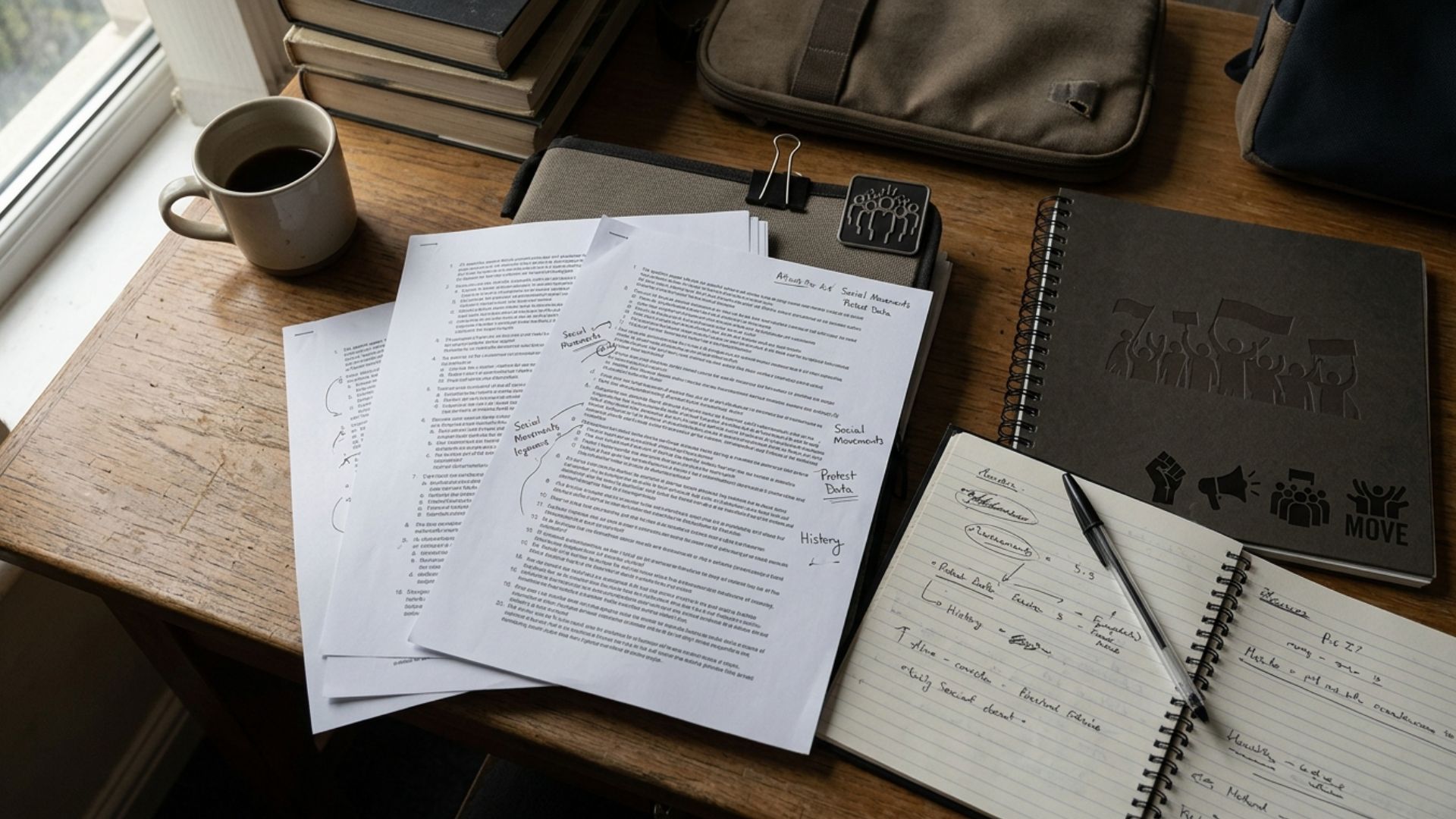
MPSE-007, “Social Movements and Politics in India,” is an important subject in the second year of the Master of Arts in Political Science (MPS) programme at Indira Gandhi National Open University. The course examines various social movements in India and their profound political impact, exploring critical issues related to democracy, rights, equality, social justice, and transformative social change. Students analyze how grassroots mobilizations, civil society organizations, and collective action shape political processes, challenge power structures, and advocate for marginalized communities. For students who are preparing for upcoming sessions, practicing solved question papers helps understand the exam pattern, identify key themes in Indian social movements, and develop the analytical answer-writing approach required for IGNOU assessments.
Table of Contents
About IGNOU MPSE-007 Social Movements and Politics in India
MPSE-007 provides comprehensive understanding of social movements in India and their complex relationship with political structures, democratic processes, and social transformation.
The course focuses on the study of social movements in India across different historical periods and thematic areas, analyzing peasant movements, workers’ movements, women’s movements, caste-based movements (particularly Dalit movements), tribal movements, environmental movements, human rights movements, and contemporary civil society mobilizations. Students examine how these movements emerge, mobilize resources, frame grievances, challenge existing power structures, and seek to transform society.
The curriculum explores the relationship between society and political structures, understanding how social movements interact with the state, political parties, electoral politics, and policy-making processes. Students analyze the role of social movements in democratization, deepening democracy, expanding rights and entitlements, and holding state institutions accountable.
The course emphasizes movements related to rights, equality, and justice including struggles for land rights, labor rights, women’s rights, caste equality, tribal autonomy, environmental justice, and human rights. Students examine how marginalized and oppressed communities organize collectively to claim constitutional rights, challenge discrimination, and demand social and economic justice.
Understanding the role of civil society in democratic processes is central to the course. Students analyze how civil society organizations, non-governmental organizations, people’s movements, and grassroots mobilizations contribute to democratic governance, policy advocacy, social reform, and political participation beyond formal electoral processes.
The course is essential for understanding contemporary Indian politics, social change dynamics, participatory democracy, and the complex interplay between state, society, and social movements in shaping India’s political landscape.
Importance of Previous Year Question Papers
Previous year question papers are essential tools for effective IGNOU exam preparation in social movements and politics, offering multiple strategic advantages:
- Help understand exam pattern and question trends: Reviewing past papers reveals the structure of MPSE-007 examinations including types of questions asked (long-answer questions on major movements or theoretical frameworks, medium-answer questions on specific aspects of movements, comparative questions examining different movements or periods), mark distribution patterns, section-wise organization, and internal choice provisions enabling strategic preparation.
- Identify important topics and repeated questions: Analysis of previous papers reveals that certain themes appear regularly including theoretical perspectives on social movements (resource mobilization theory, political process theory, new social movements theory), historical evolution of social movements in India, peasant and farmers’ movements, workers’ and labor movements, women’s movements and feminist politics, Dalit movements and caste politics, tribal movements and indigenous rights, environmental movements, contemporary civil society activism, relationship between social movements and electoral politics, and impact of globalization on social movements. Recognizing these recurring patterns helps students prioritize preparation effectively.
- Improve writing and analytical skills: MPSE-007 examinations require sophisticated political science skills—clearly explaining theoretical frameworks for understanding social movements, analyzing specific movements using conceptual tools, comparing different types of movements and their strategies, evaluating effectiveness and impact of movements on policy and social change, relating movements to broader political and economic contexts, and engaging with contemporary debates about participatory democracy and civil society. Practicing with previous papers develops these essential analytical and writing skills.
- Assist in preparation for IGNOU Term End Examination (TEE): Previous papers provide practical insights into the expected depth of analysis, appropriate balance between theoretical discussion and empirical examples, effective use of case studies from Indian social movements, proper political science terminology, integration of different perspectives (sociological, political, historical), and the level of critical engagement required in well-developed responses on social movements and politics.
Key Topics in MPSE-007
Students should ensure thorough preparation across the following key topics that commonly appear in MPSE-007 examinations:
- Social Movements in India: Theoretical perspectives on social movements (collective behavior theory, resource mobilization theory, political process theory, identity-based movements, new social movements), historical evolution of social movements in India (colonial period movements, post-independence movements, contemporary movements), peasant and agrarian movements (Telangana movement, Naxalite movement, farmers’ movements, Kisan agitations), workers’ and labor movements (trade unions, organized and unorganized labor, class struggles), women’s movements (reform movements, feminist movements, women’s participation in national movement, contemporary women’s activism), Dalit movements (anti-caste movements, Ambedkarite movement, Dalit Panthers, assertion and empowerment), tribal movements (Jharkhand movement, autonomy struggles, forest rights movements), environmental movements (Chipko movement, Narmada Bachao Andolan, ecology and justice), student movements, human rights movements, peace movements.
- Political Participation and Mobilization: Forms of political participation beyond electoral politics (protests, demonstrations, civil disobedience, advocacy), mobilization strategies and tactics (mass mobilization, alliance building, media use, legal strategies), leadership in social movements, organization and networks (formal organizations, informal networks, coalitions), funding and resource mobilization, relationship between movements and political parties, electoral politics and movement politics, co-optation and institutionalization of movements, success and failure of movements (measuring impact, policy changes, social transformation).
- Rights, Justice, and Equality: Constitutional rights and social movements (fundamental rights, directive principles, right to equality, right to freedom), struggles for social justice (caste discrimination, gender inequality, class exploitation), economic rights and movements (right to work, minimum wages, land rights, livelihood rights), cultural rights and identity politics (linguistic movements, religious movements, cultural assertion), environmental justice (ecology, sustainability, displacement, development-induced displacement), human rights activism (civil liberties, state violence, custodial deaths, disappearances), right to information movement, right to food movement, MGNREGA and right to work.
- Role of Civil Society in Democratic Processes: Concept and nature of civil society, civil society organizations and NGOs (development NGOs, advocacy organizations, service delivery, empowerment approaches), relationship between civil society and state (partnership, confrontation, autonomy), civil society and democracy (deepening democracy, participatory governance, accountability), critiques of NGOization and professionalization of activism, grassroots movements versus institutionalized civil society, international funding and civil society, civil society in policy-making (consultation, advocacy, lobbying), social capital and civic engagement, voluntarism and social service.
- Contemporary Political Issues and Social Movements: Globalization and social movements (anti-globalization movements, resistance to neoliberal policies, impact on labor and farmers), communalism and secular movements, caste politics and social justice movements, movements against corruption (India Against Corruption, anti-corruption campaigns), movements for transparency and accountability, digital activism and social media in contemporary movements, youth activism and student movements, LGBTQ+ rights movements, disability rights movements, migrants’ rights and urban poor movements, farmers’ protests (recent Kisan agitations), challenges facing social movements in contemporary India (state repression, criminalization of protest, UAPA and sedition laws, shrinking space for dissent).
Download MPSE-007 Solved Question Paper December 2024
The solved question paper for MPSE-007 December 2024 examination is provided as an academic reference resource for students in the MPS 2nd year. This document illustrates appropriate answer structures, analytical frameworks for examining social movements, critical evaluation of movements and their impact, integration of theoretical and empirical perspectives, and depth of political science analysis expected in examinations on social movements and politics in India.
📄 Download MPSE-007 Solved Question Paper December 2024 PDF
⚠️ The file is hosted on an external website. Avoid clicking unnecessary ads while downloading.
Students should use this material alongside prescribed IGNOU study materials and recommended texts on Indian social movements and politics to develop comprehensive understanding and effective examination preparation strategies.
Other MPS 2nd Year Subjects
Students in the MPS 2nd year may also find resources for these related courses useful:
- MPSE-008: State Politics in India – Examination of politics at state level in India including federalism, regional parties, state-center relations, and regional political dynamics.
- MPSE-003: Western Political Thought – Study of major Western political thinkers and traditions from ancient Greece through modern and contemporary political philosophy.
- MPSE-004: Social and Political Thought in Modern India – Analysis of Indian political thought in modern period including reform movements, nationalist thought, and post-independence political ideologies.
Disclaimer
Important Notice:
This website is not officially affiliated with IGNOU. Study materials and solved question papers are shared for educational and reference purposes only. All rights belong to their respective owners.
Students are strongly encouraged to consult official IGNOU study materials and prescribed texts on social movements and politics in India for comprehensive preparation. This solved paper should be used as a supplementary study tool to understand examination patterns, question formats, and analytical approaches while developing independent critical thinking about social movements, political participation, and democracy in India.
For issues or broken links, please contact support@ignoufox.in
FAQs
What is MPSE-007 in IGNOU MPS?
MPSE-007 is “Social Movements and Politics in India,” a subject in the 2nd year of the Master of Arts in Political Science (MPS) programme at IGNOU. The course examines various social movements in India including peasant movements, workers’ movements, women’s movements, Dalit movements, tribal movements, environmental movements, and contemporary civil society activism
Are previous year question papers useful for IGNOU exams?
Yes, previous year question papers are extremely useful for IGNOU MPSE-007 exam preparation. They help students understand examination structure and question patterns, identify frequently asked topics on different types of social movements and theoretical frameworks, practice analytical writing on political and social issues
Can I download the MPSE-007 solved question paper PDF?
Yes, the MPSE-007 Solved Question Paper for December 2024 can be downloaded from the link provided in this blog post. The file is hosted on an external website. Students should use this resource as a reference guide while preparing their own answers based on IGNOU study materials, recommended texts on Indian social movements, and independent understanding of political participation, civil society, and democratic processes in India.
Is this paper helpful for IGNOU TEE preparation?
Yes, this solved question paper is helpful for Term End Examination preparation as it provides insights into the types of questions asked on social movements and politics, expected depth of analysis of movements and their political impact, appropriate use of theoretical frameworks and empirical examples, balance between description and critical evaluation, and effective structuring of political science responses.